Kailash Shankar
Building
technology
that matters.
University of Florida · CS + Linguistics · GPA 4.0
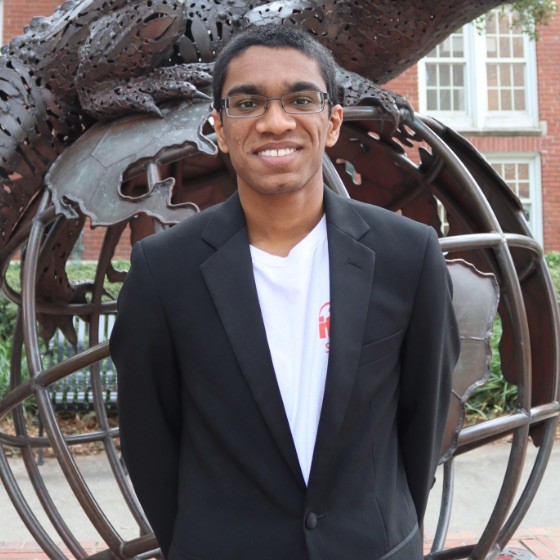
I build software at the intersection of language, learning, and AI.
I’m a Computer Science student at the University of Florida with a minor in Linguistics, and the founder of Lingua — an AI learning management system that gives world-language teachers back their evenings. What started as a side project is now piloted with 200+ students and teachers, has auto-graded over 1,500 submissions, and is live at its first fully-approved school.
Along the way I’ve learned that the hard part of shipping AI into classrooms isn’t the model — it’s everything around it. Tenant isolation, FERPA and COPPA, grade passback into Canvas, and pricing that a school district can actually say yes to. I like that kind of problem: the kind where the engineering only matters if it earns real people’s trust.
When I’m not building Lingua, I research how language models generalize across the world’s linguistic diversity in UF’s Computational Linguistics Lab, and I spent this past summer at GlobalLogic shipping Potentia, an agentic LMS, to production.

I founded Lingua to give world-language teachers back their evenings. It's an AI learning management system that creates and auto-grades reading, writing, listening, and speaking assignments against a teacher's own rubrics — piloted with 200+ students and teachers, 1,500+ submissions auto-graded, and now live at its first fully-approved school.
- Built and shipped the platform end-to-end, from multimodal grading pipelines to teacher-facing tooling, and drove it through pilot into its first production school.
- Identified that student use required a district data privacy agreement, voluntarily disabled all student access, and authored a full FERPA/COPPA compliance program — privacy policy, subprocessor list, data-flow map, breach response plan — securing the first school approval.
- Drove product direction from teacher interviews: shipped handwritten photo submission, per-section deadlines, and print/export mode; modeled per-student pricing against a $3.27/student/yr inference cost.
- Led go-to-market across 5 Florida district world-language leads and 10+ independent schools; won 3rd place at ITServe Startup Cube, selected to present at the national Synergy event, and presenting at the FFLA state conference in October 2026.

GlobalLogic
Designed, built, and shipped Potentia — an end-to-end agentic AI learning management system — from architecture through a production deployment, then defended the design in front of engineering leadership.
- Shipped a production deployment with CI-enforced quality gates and a complete technical specification for handoff.
- Selected for technical workshops on Agentic AI and the AI-Driven Development Lifecycle (AIDLC).
- Delivered the final product demo and technical Q&A to GlobalLogic engineering leadership, defending architecture decisions.

UF Computational Linguistics Lab
Investigating how LLMs generalize across the world's linguistic diversity — with a focus on the low-resource languages that modern AI systematically leaves behind.
- Investigated LLM generalizability via cross-lingual partitioning of morphologically segmented data across diverse language families to enhance zero-shot performance on low-resource languages.
- Benchmarked CRF model performance across 11 typologically distinct languages on UF HiPerGator, analyzing the impact of massive multilingual scale on cross-linguistic transfer.
- Quantified model robustness by systematically injecting artificial annotation errors into training sets to empirically model the trade-off between data scale and annotation noise.
Aug 2025 – Present · University Scholars Program · with Dr. Zoey Liu
Computational Linguistics Lab
Language shapes how we see the world — yet most of today’s AI speaks only a handful of them fluently. Working with Dr. Zoey Liu, I investigate how data partitioning strategies on LLM training data impact model generalization across the world’s linguistic diversity, with a particular focus on low-resource languages that are systematically underrepresented in modern AI.
My current work quantifies a fundamental trade-off: how much does annotation quality matter when data is scarce? By systematically injecting controlled annotation errors into training sets and benchmarking CRF models across 11 typologically distinct languages on UF’s HiPerGator supercomputer, I’m building an empirical map of where multilingual scale helps cross-linguistic transfer — and where it breaks down.
Quality vs. Quantity
Modeling the trade-off between dataset scale and annotation fidelity — a question with outsized implications for languages where data is precious.
11 Typologically Distinct Languages
Benchmarking CRF models across a typologically diverse language set to understand how massive multilingual scale affects cross-linguistic transfer beyond high-resource clusters.
Morphological Segmentation
Investigating cross-lingual partitioning of morphologically segmented data across language families to improve zero-shot performance for understudied tongues.
Jan 2026 – Present
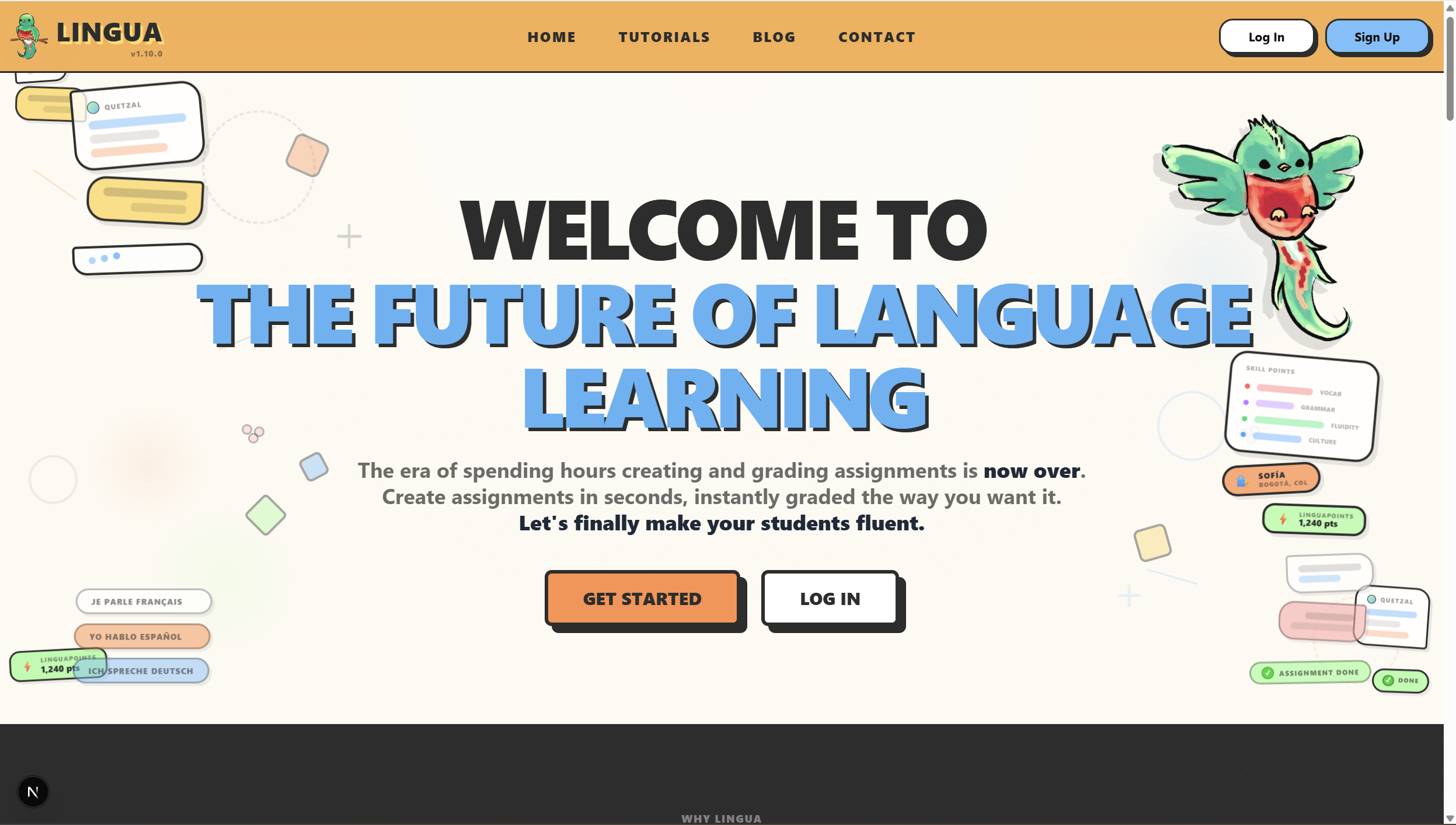
LINGUA
AI Learning Management System for World-Language Classrooms
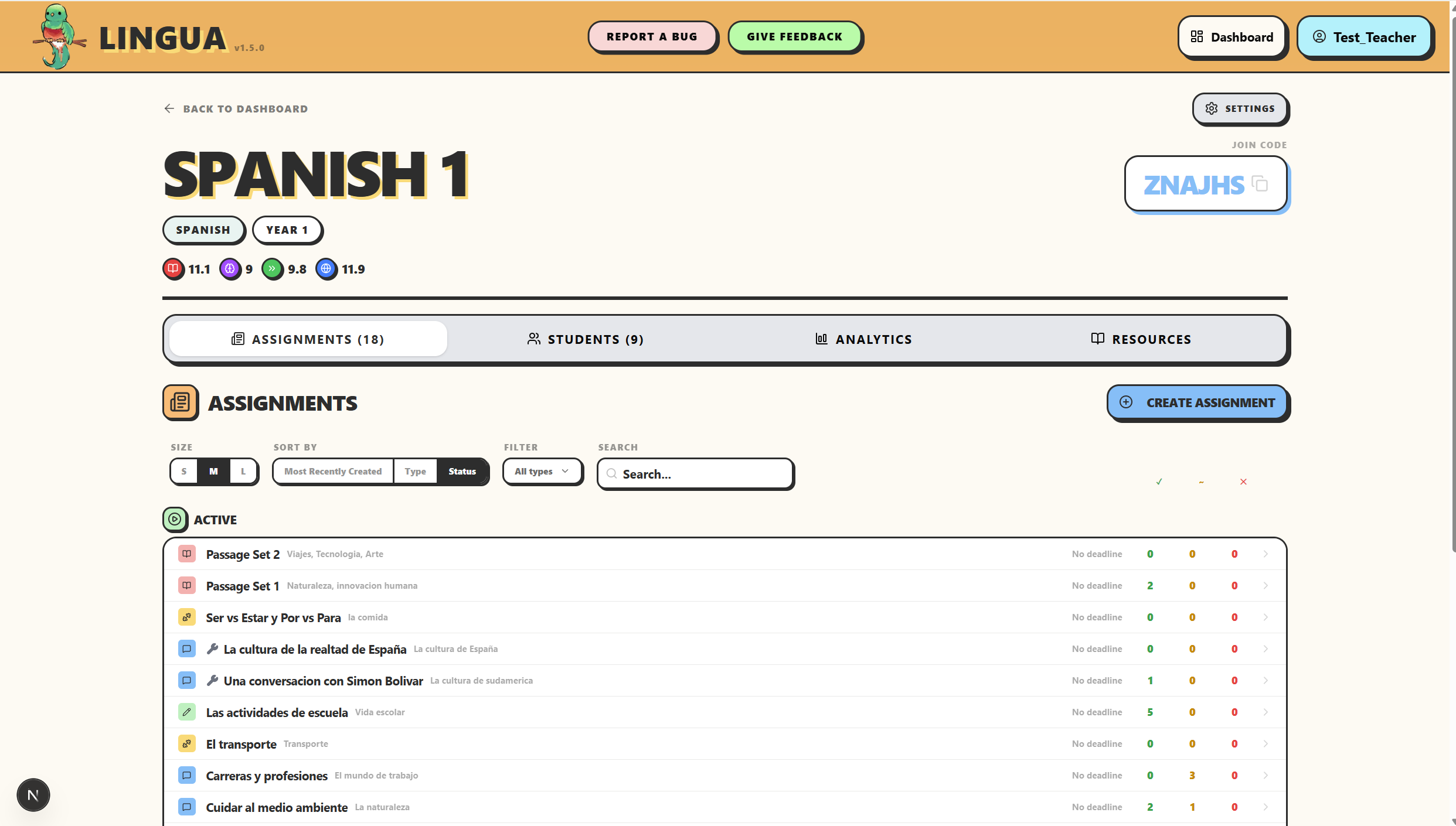
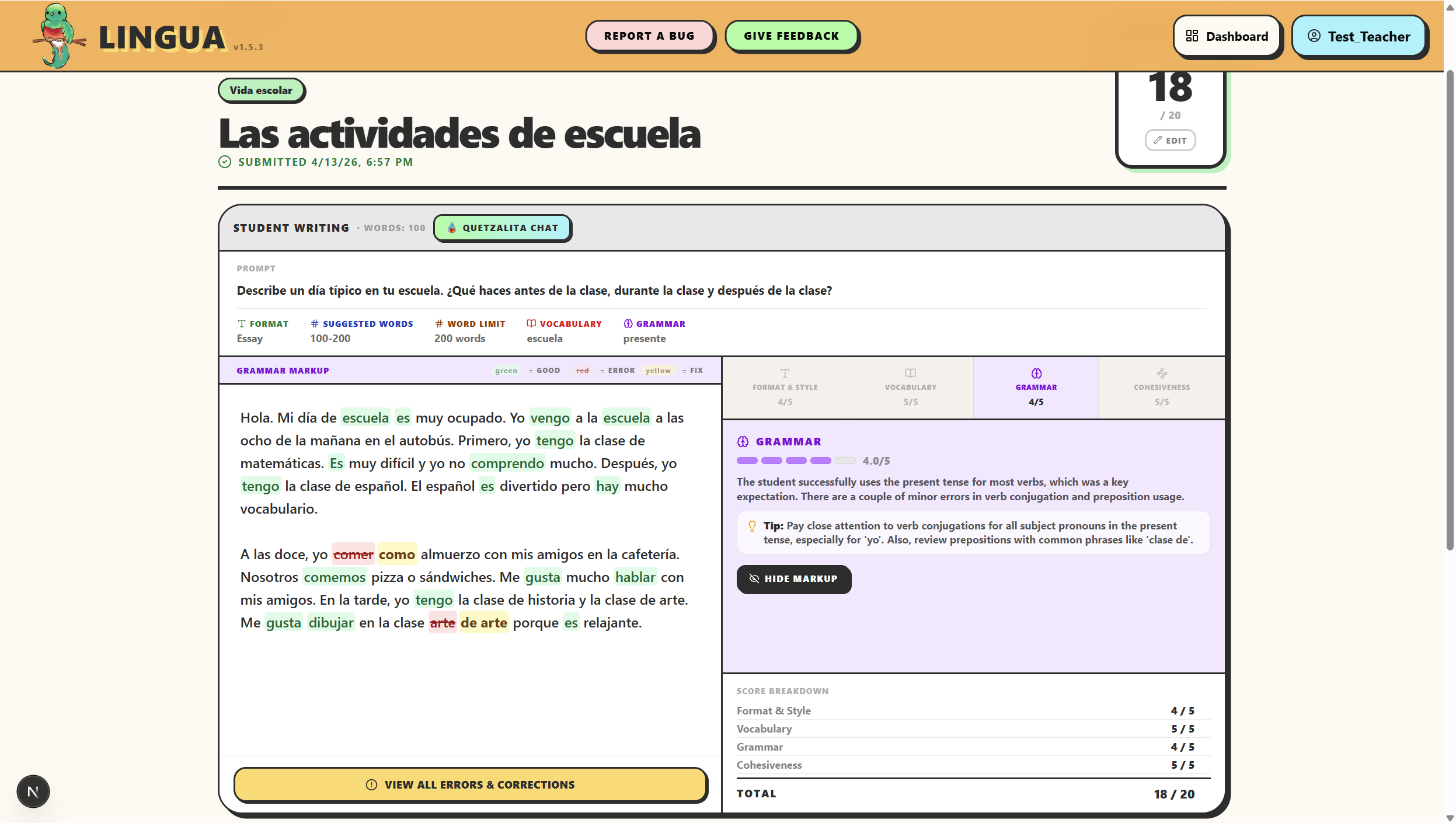
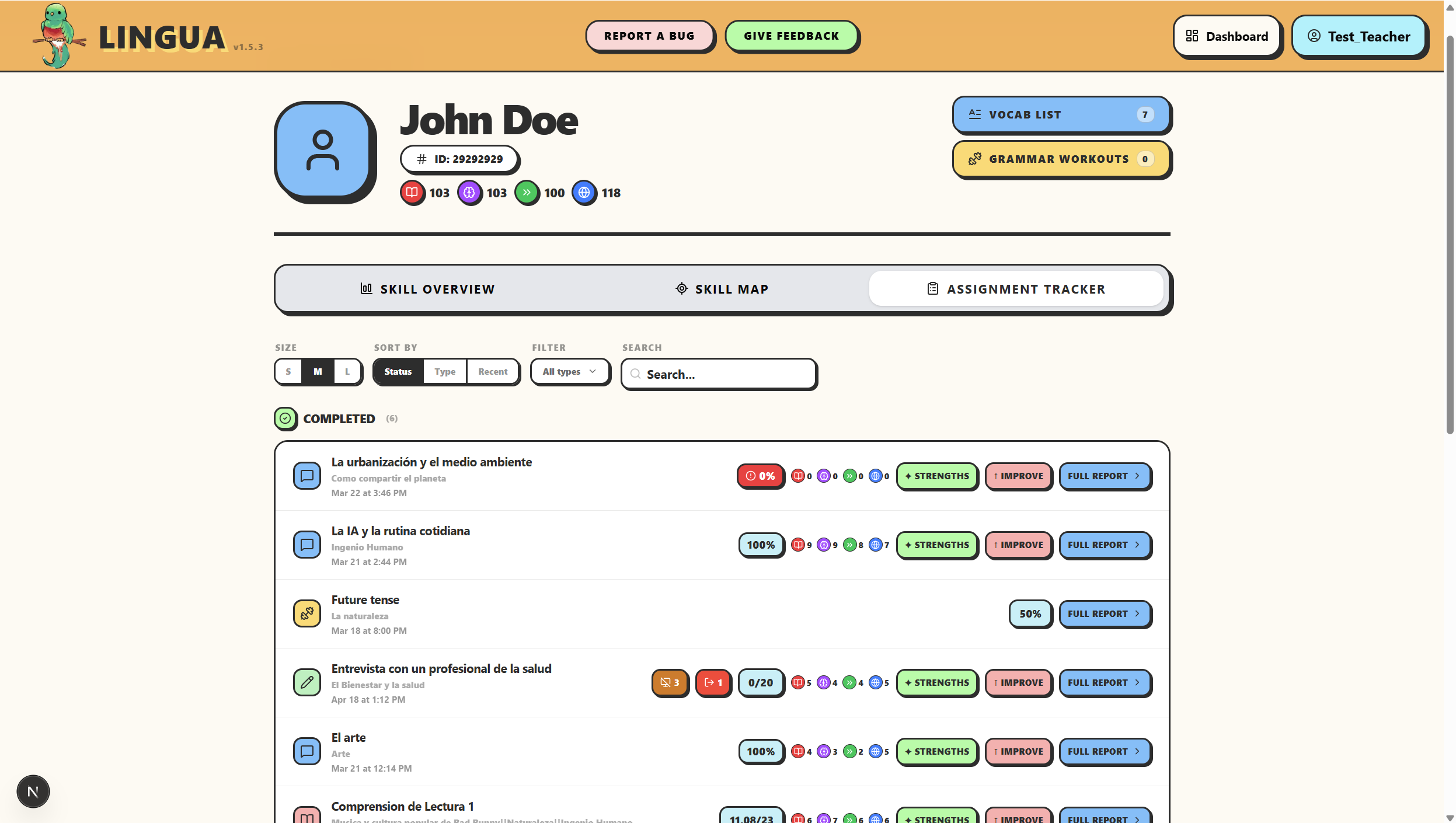
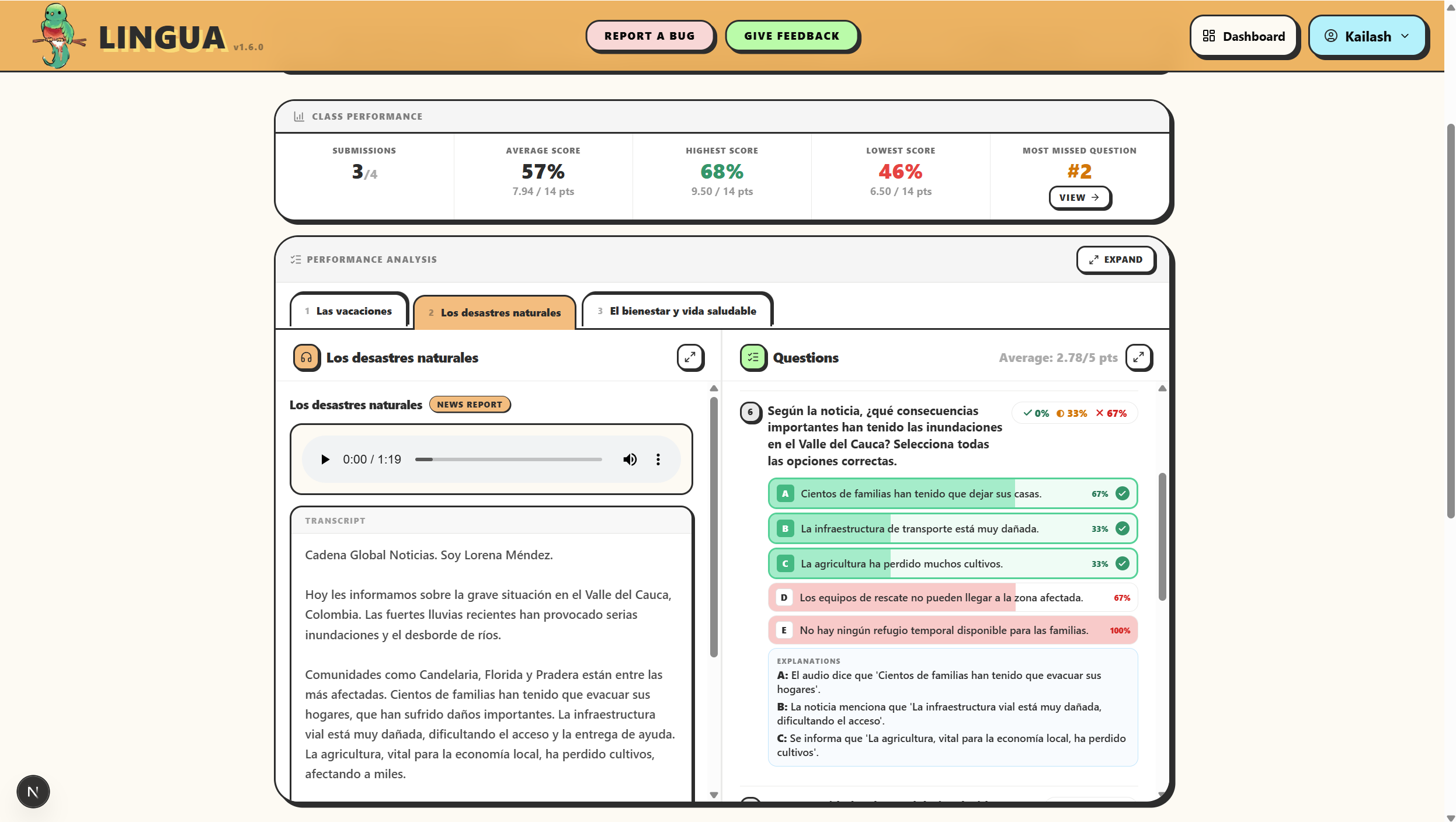
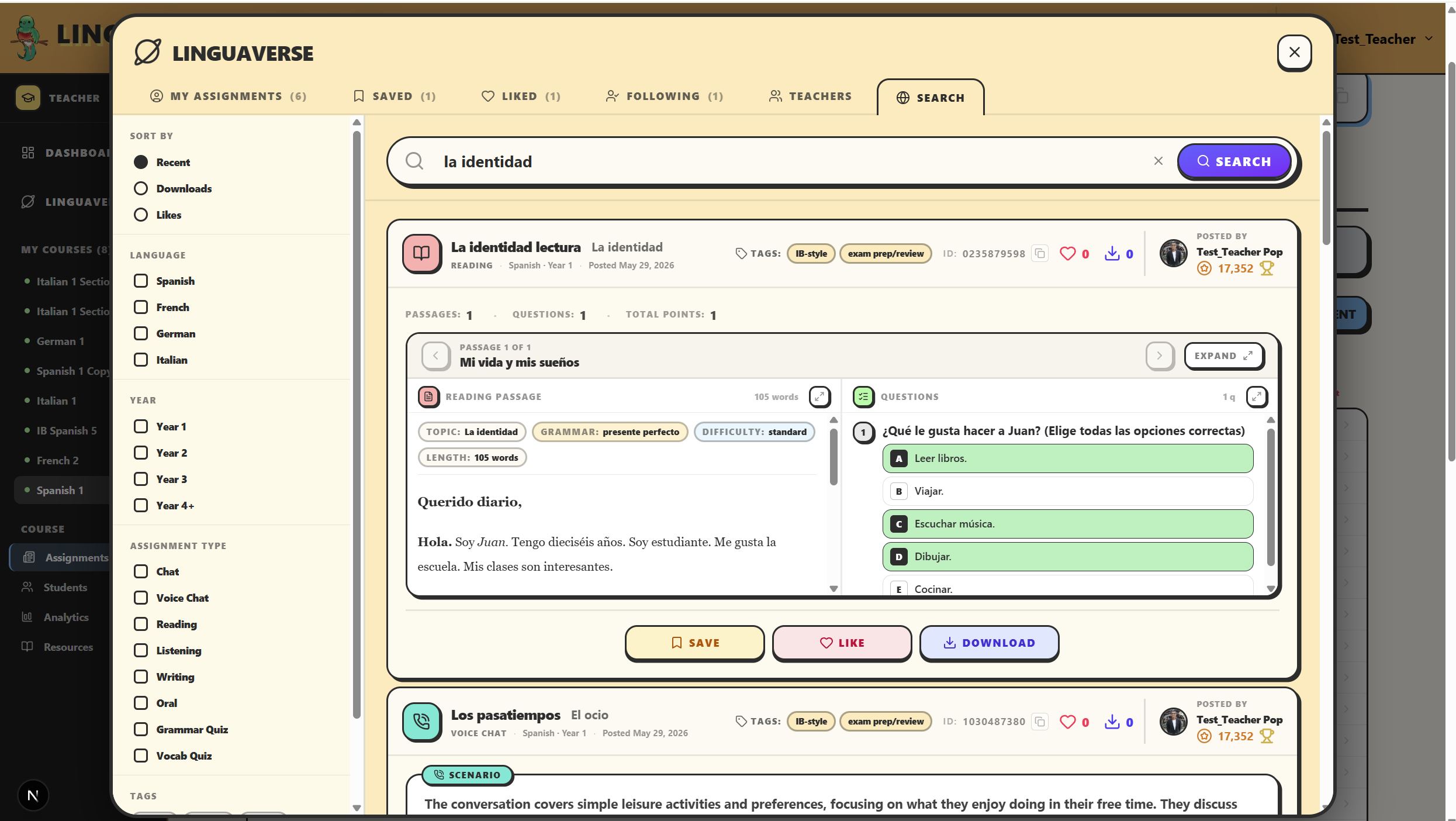
Teachers create reading, writing, listening, and speaking assignments tailored to their curriculum in a few clicks; every submission is auto-graded against their own rubrics with personalized feedback for each student — turning hours of grading into seconds.
Platform Features
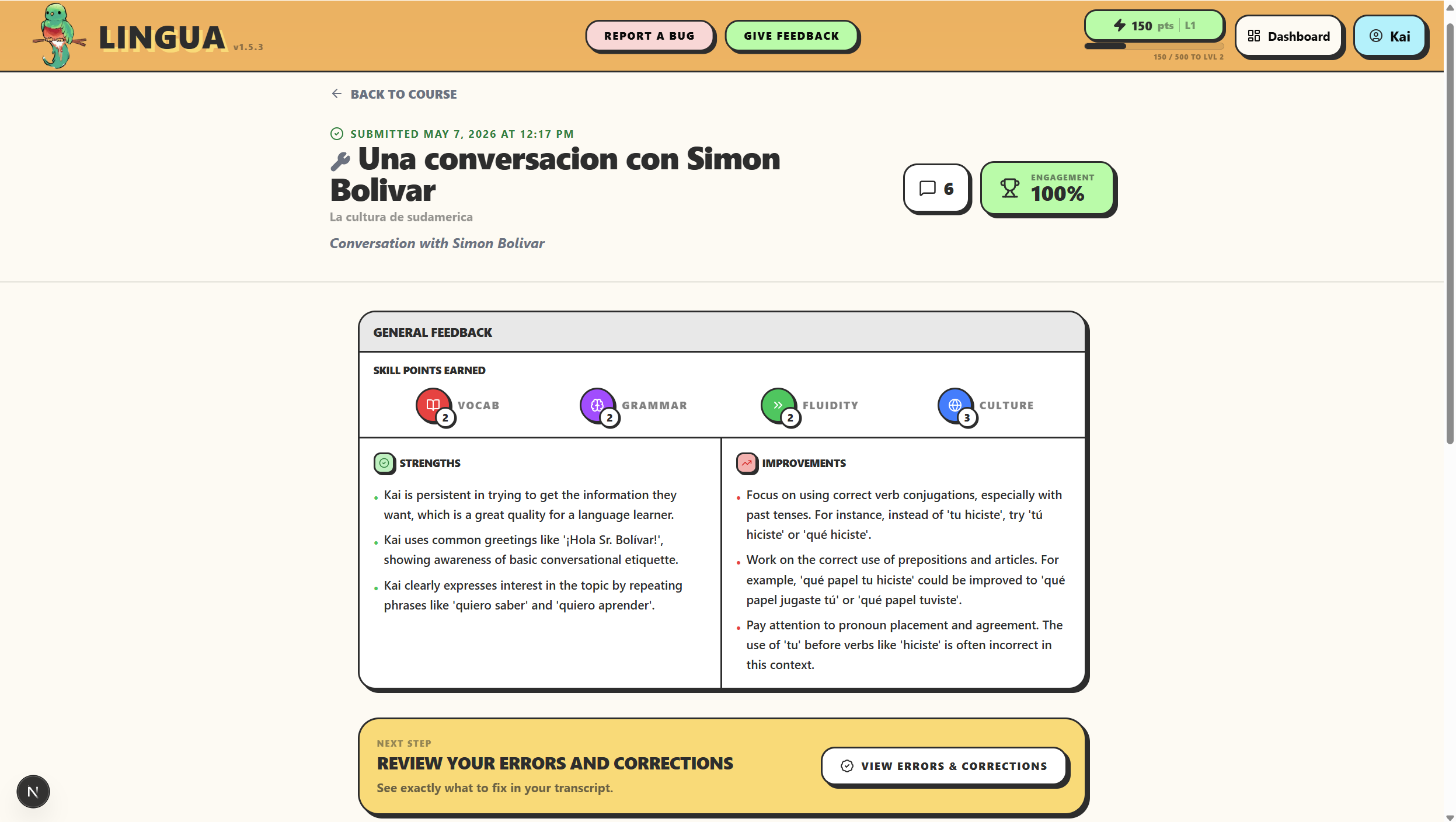
Students converse face-to-face with distinct AI characters based on in-class topics, enabling contextually rich, authentic language practice.
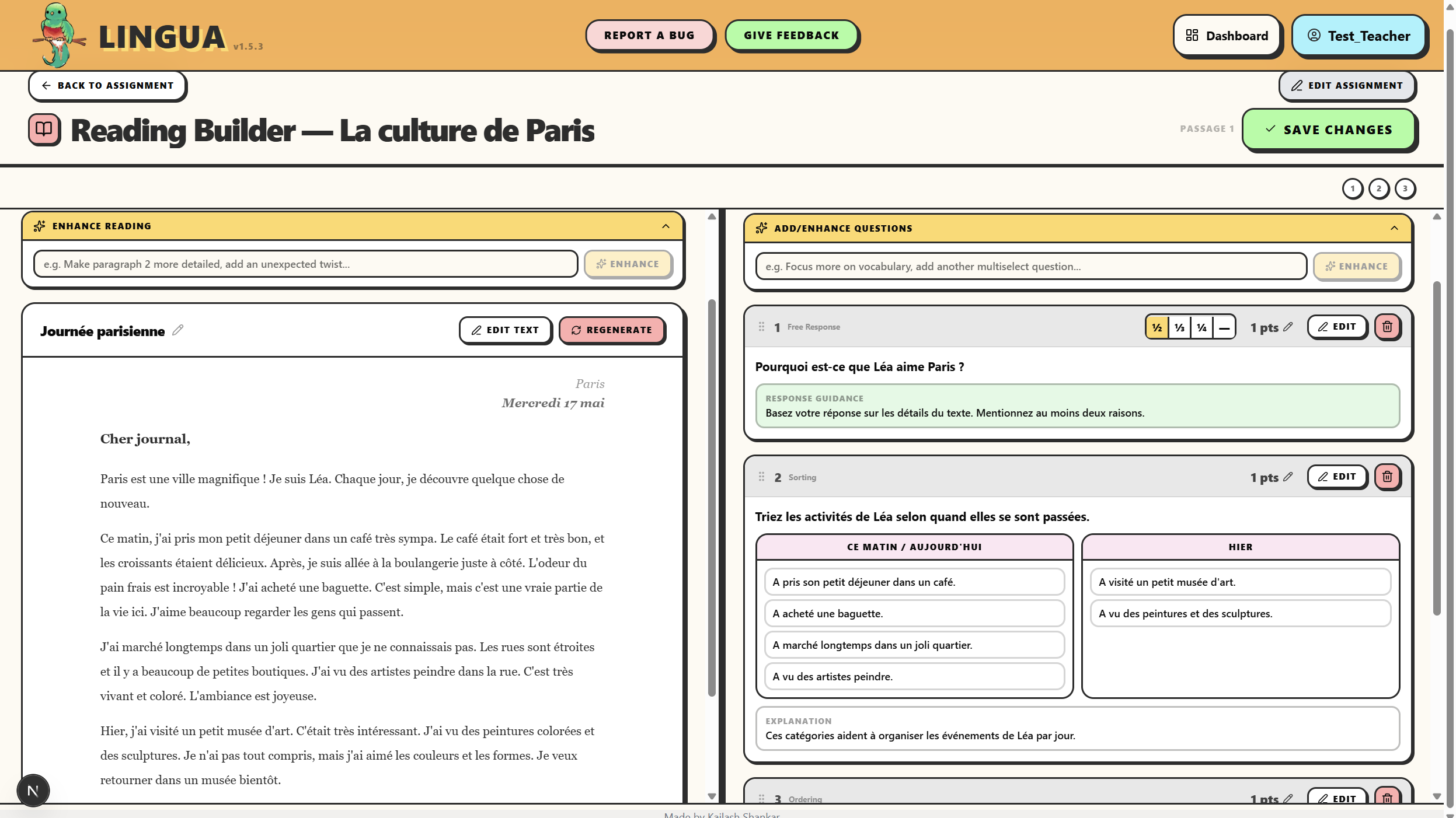
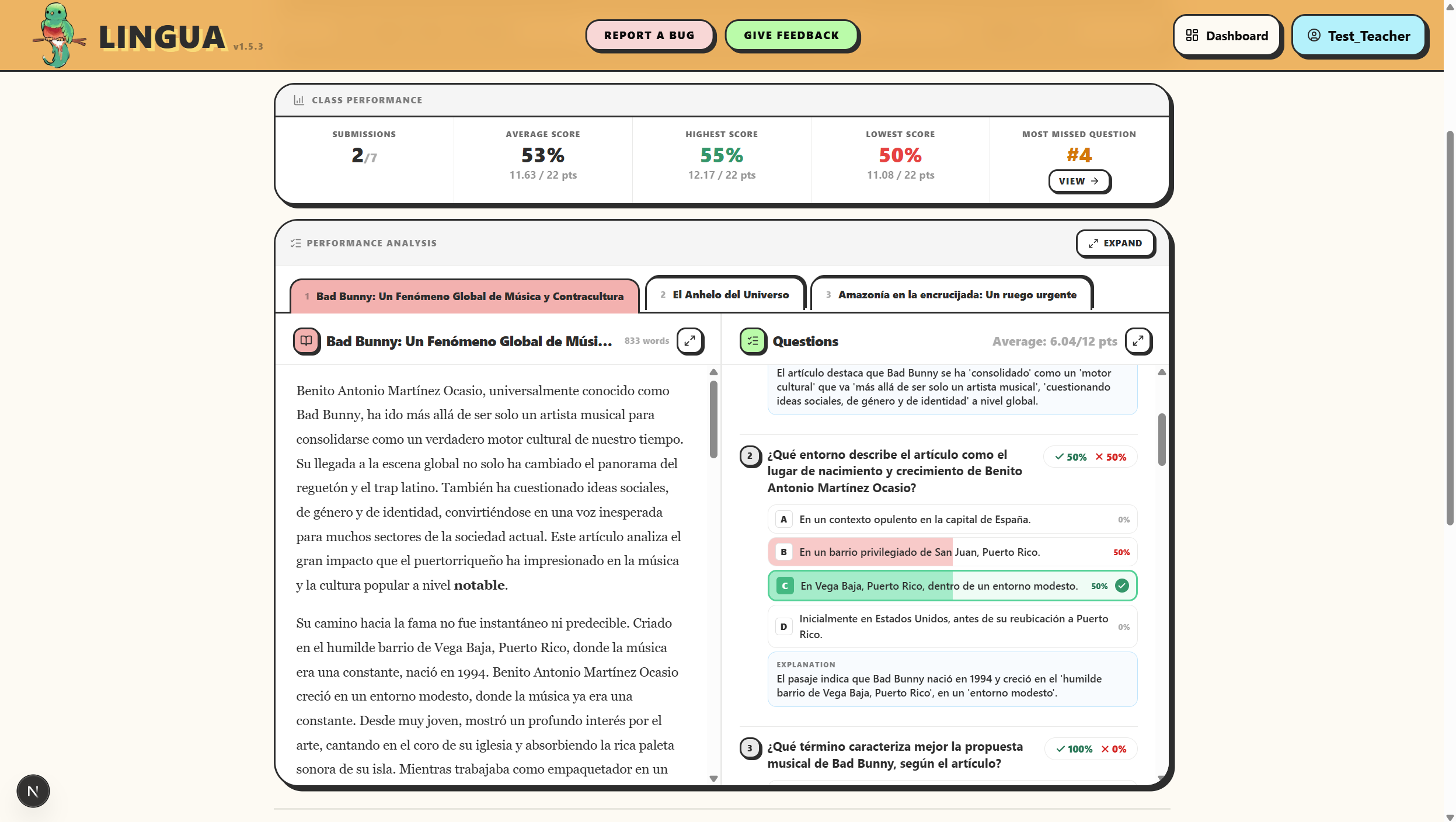
Teachers create authentic passages, audios, and comprehension questions tailored to their curriculum in just seconds. Students complete them in real-time with instant scoring feedback.
Prompt-based writing tasks, submitted through the platform text editor or handwritten images, are auto-graded by AI against teacher-defined rubrics, and marked up with detailed personalized feedback.
Students participate in presentations, conversations and discussions with the AI that are auto-graded with comprehensive feedback.
- Multimodal grading across 9 assignment types — speech, handwriting, and text scored against teacher rubrics, with model routing reserving heavier models for rubric grading.
- Deo, a teacher-facing agent: LLM tool-calling loop, NDJSON progress streaming, confirmation flows, and all-or-nothing transactional creation.
- LTI 1.3 / OIDC Canvas integration: JWT launch verification, nonce replay protection, and OAuth2 grade passback via LTI Advantage AGS.
- Postgres Row-Level Security across 31 tables, plus rate-limit admission control via a Postgres RPC claiming per-minute model slots.
- Recognized student use required a district data privacy agreement — and voluntarily disabled all student access until one was in place.
- Authored a full FERPA / COPPA compliance program: privacy policy, subprocessor list, data-flow map, and breach response plan.
- Secured Lingua's first school approval — now live at its first fully-approved school.
- Product direction driven by teacher interviews — handwritten photo submission, per-section deadlines, print/export mode.
- Go-to-market across 5 Florida district world-language leads and 10+ independent schools.
- 3rd place at ITServe Startup Cube · selected to present at the national Synergy event · presenting at the FFLA state conference, Oct 2026.

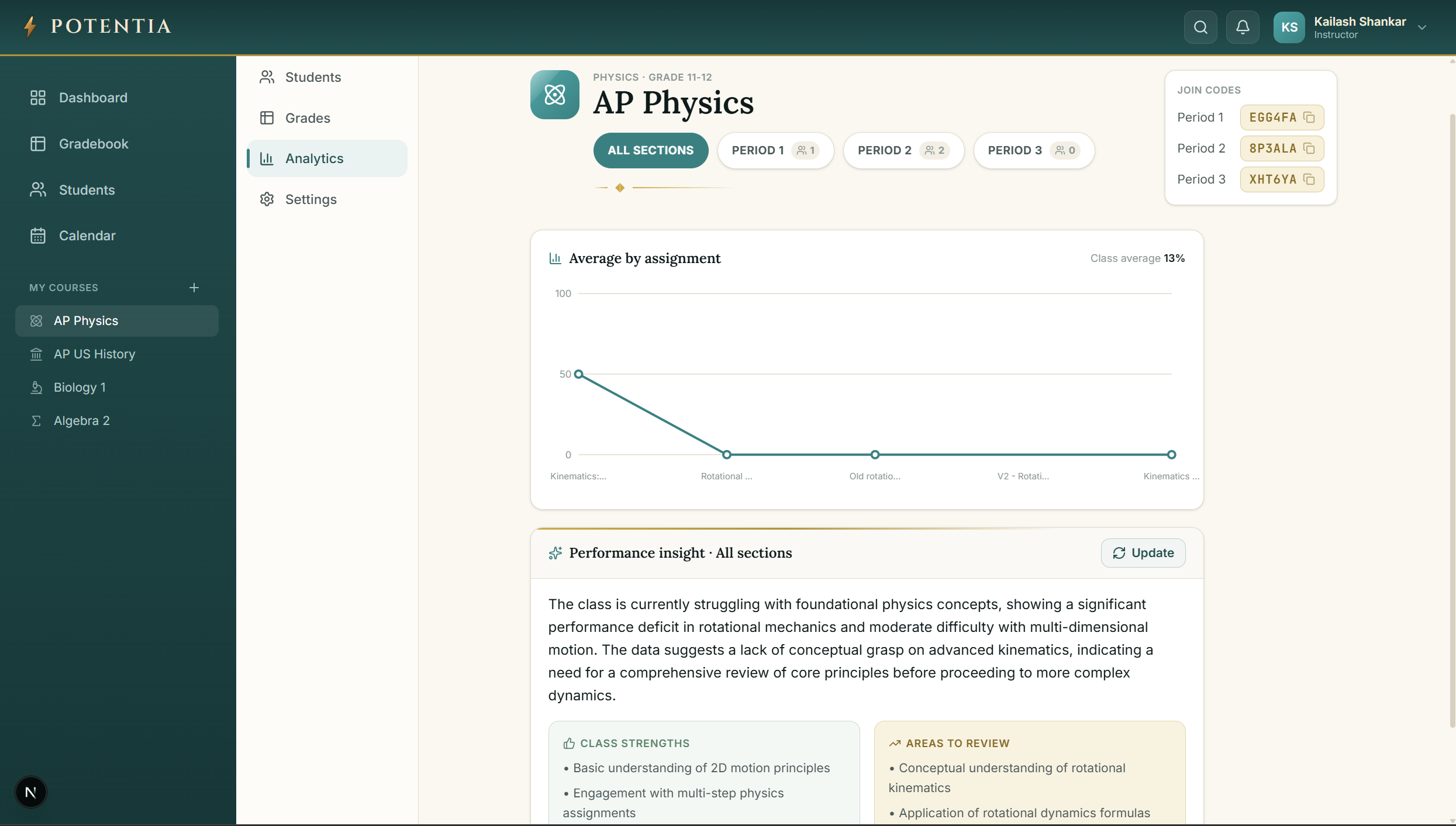
POTENTIA
Agentic AI Learning Management System
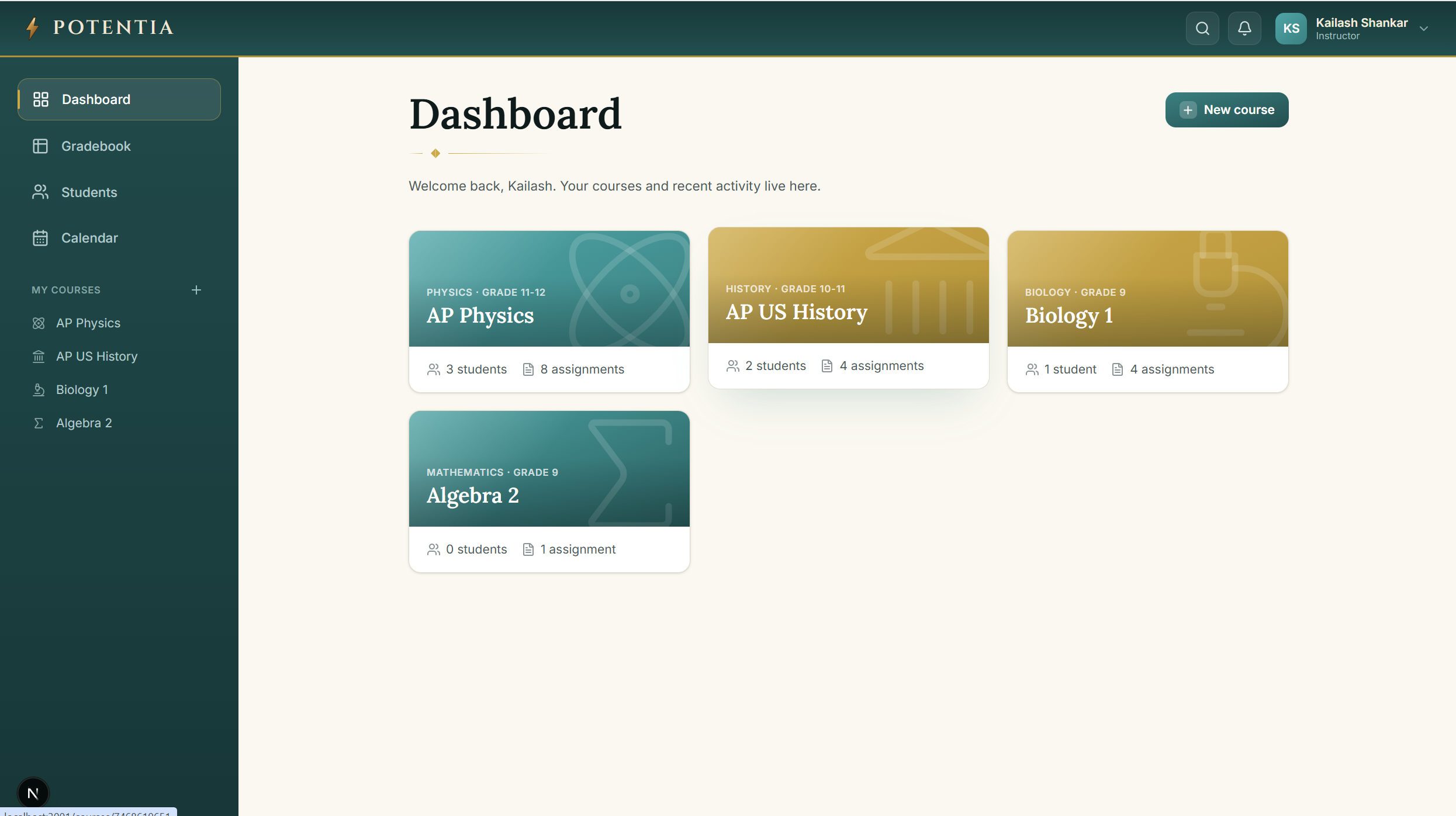
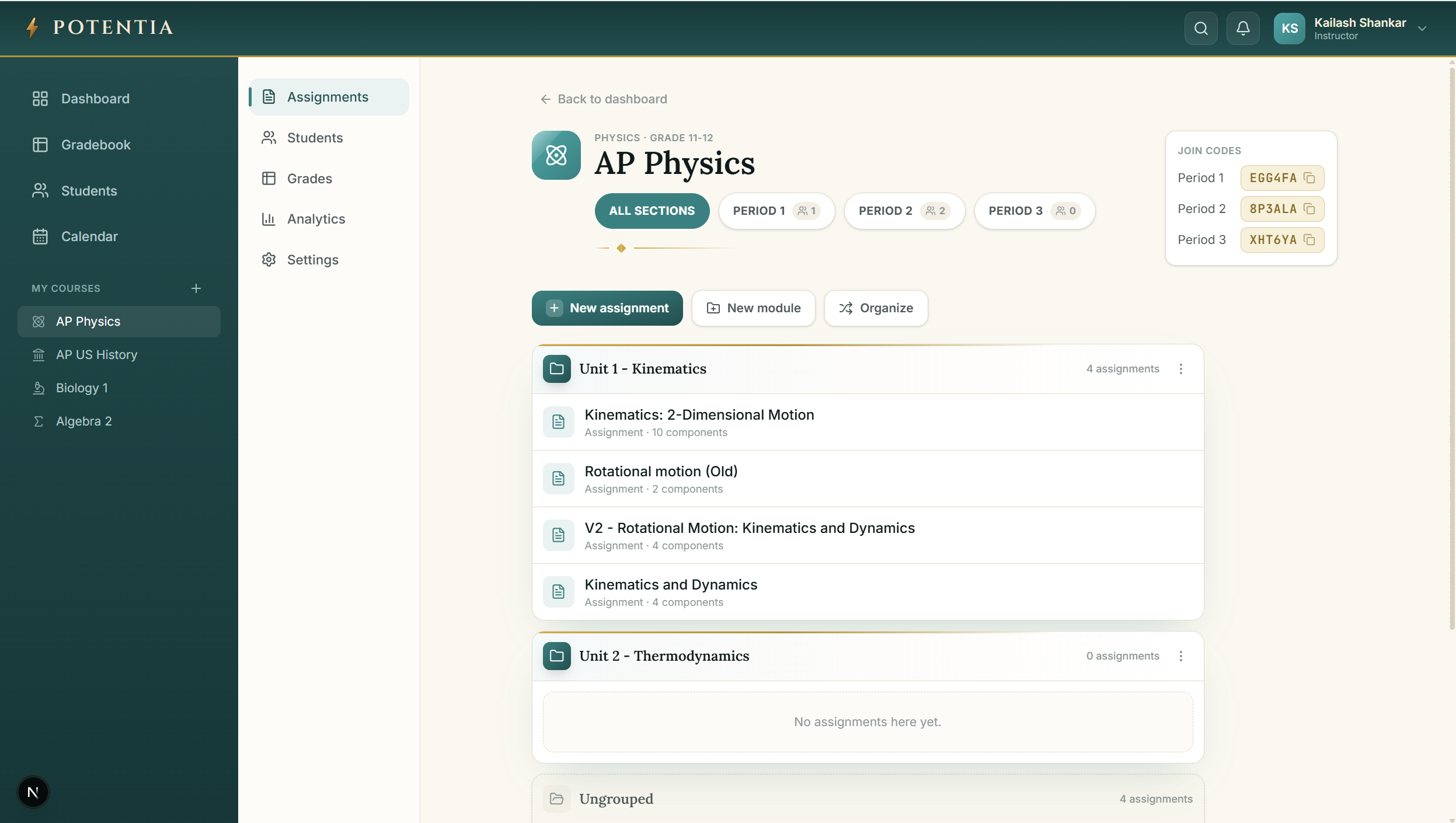
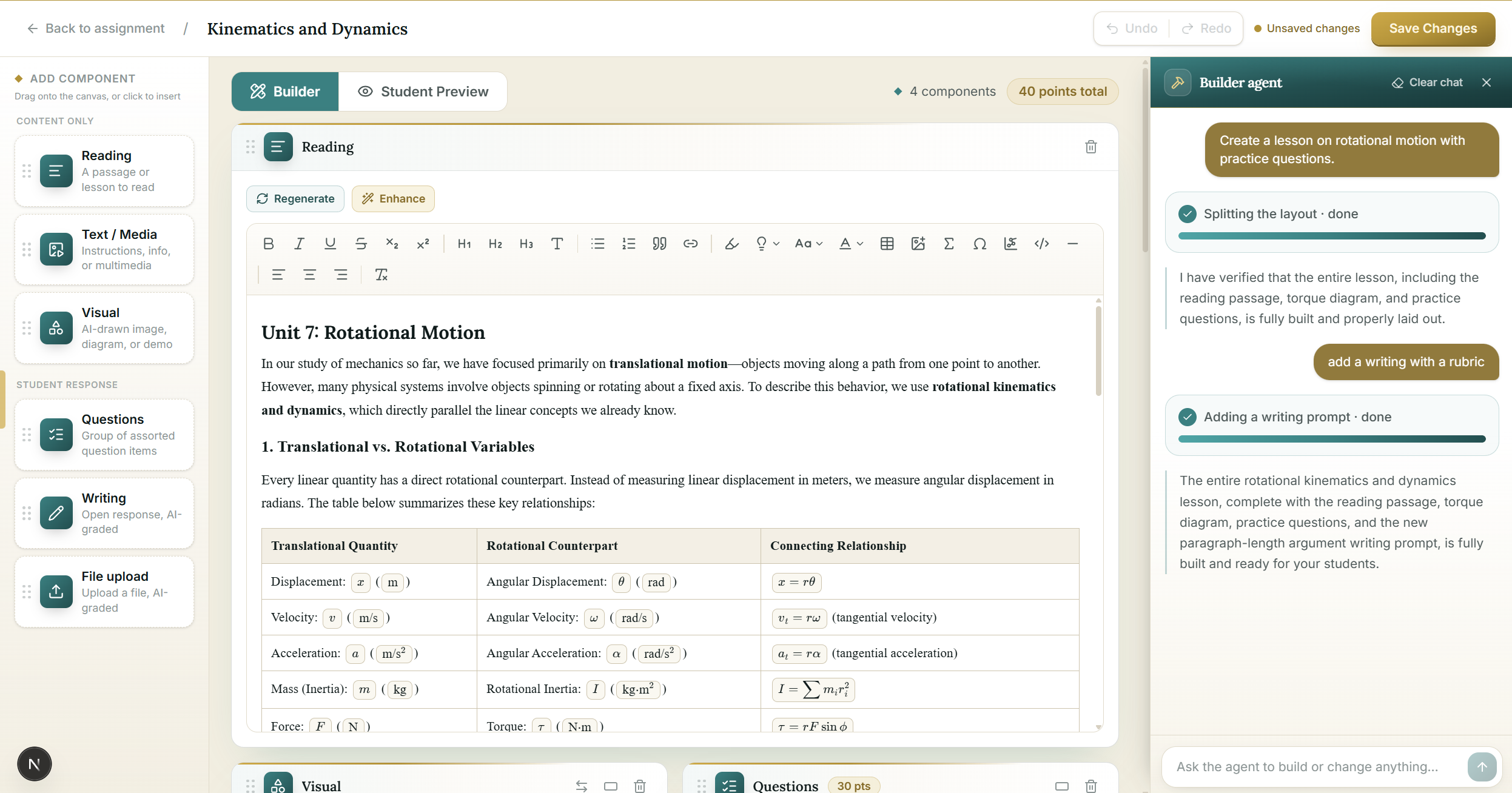
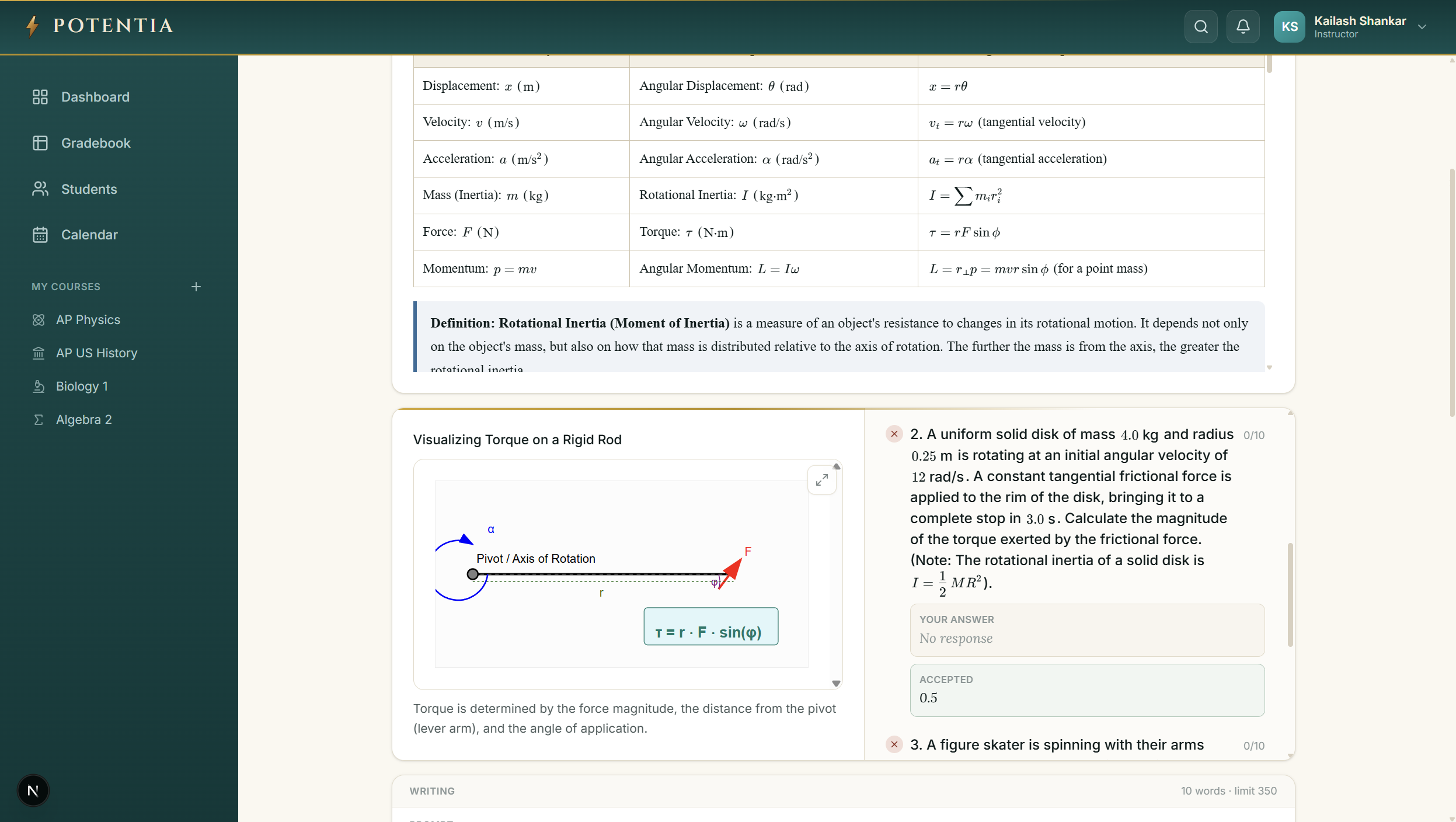
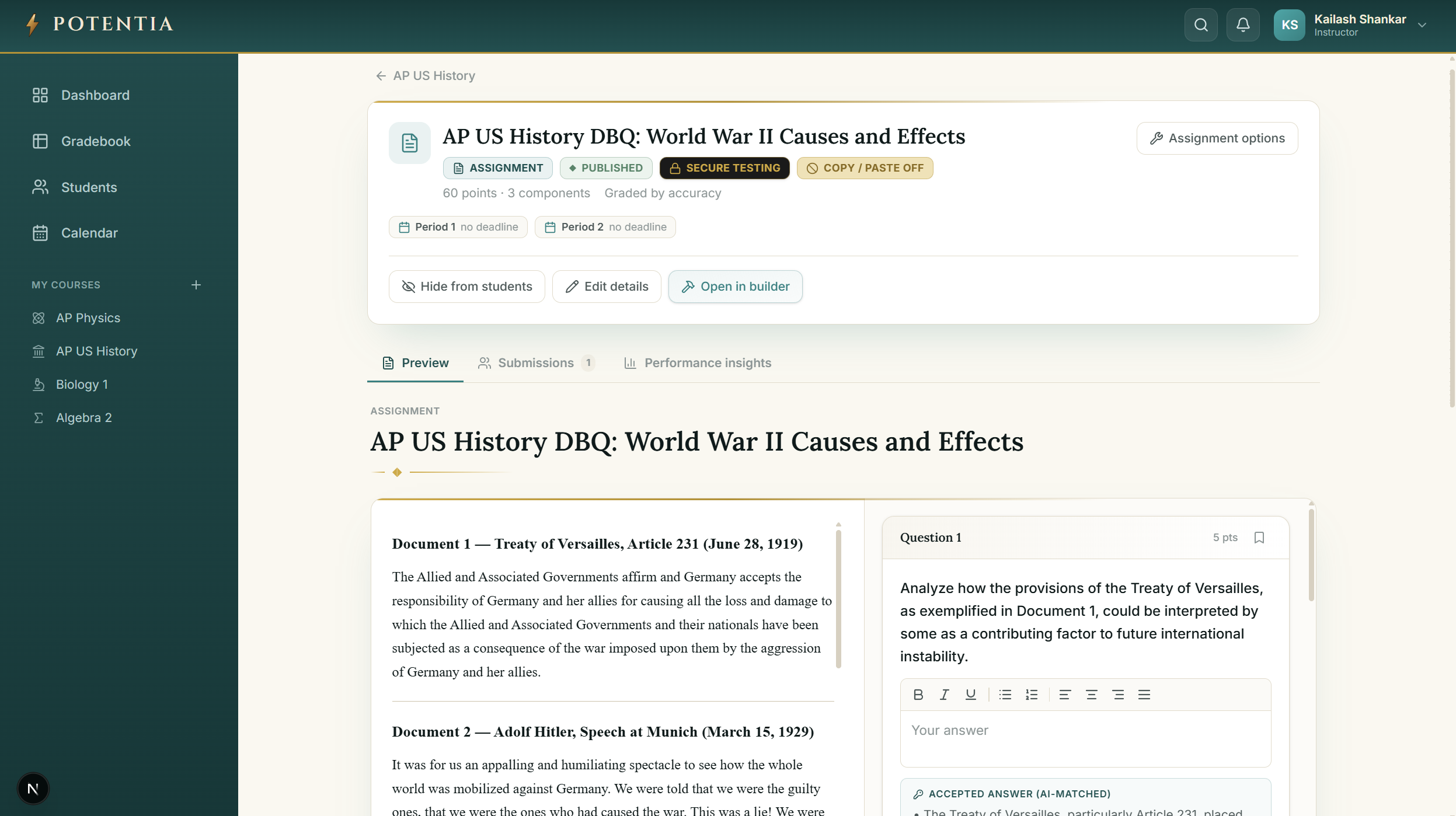
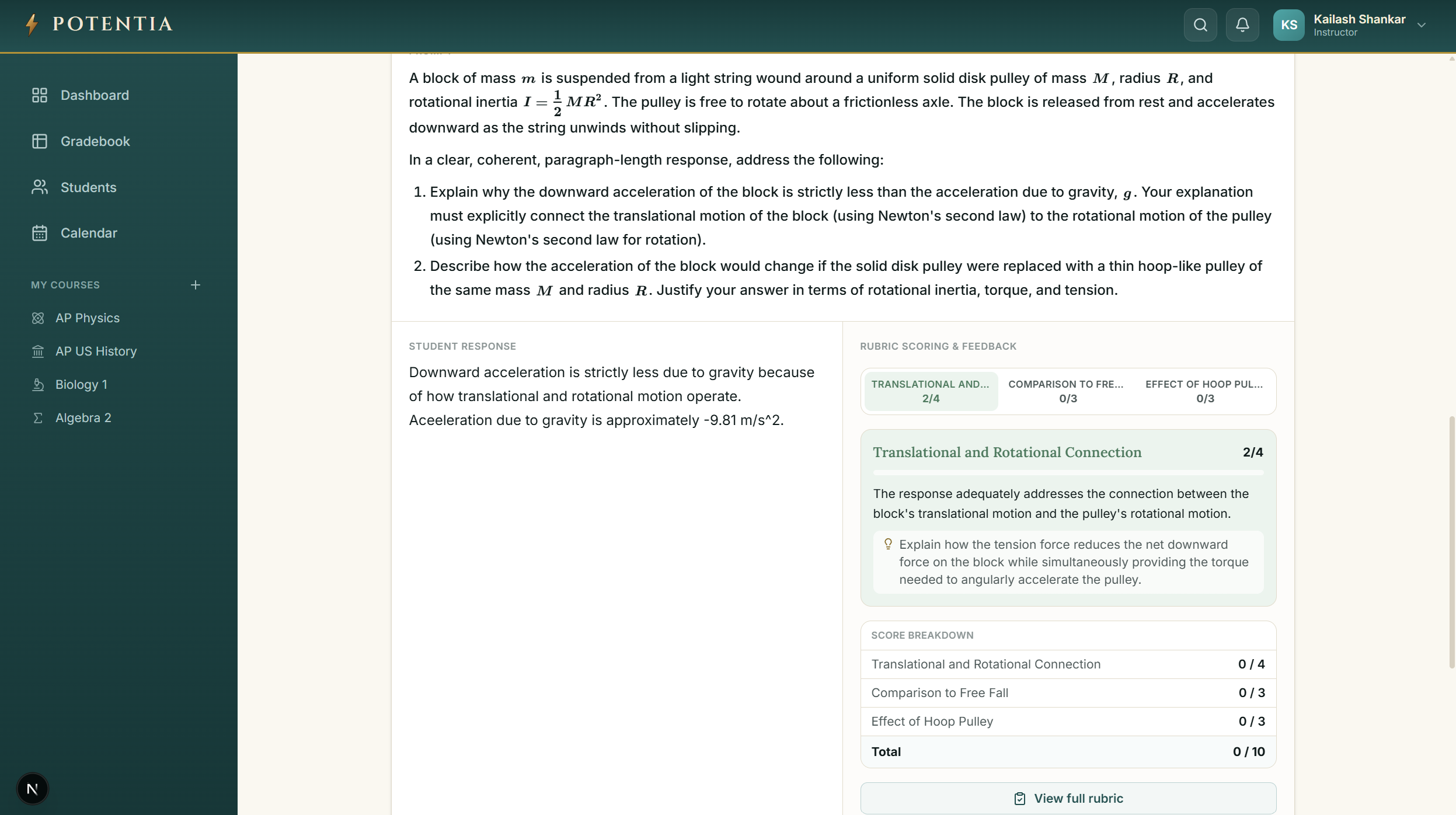
An end-to-end agentic LMS I designed, built, and shipped at GlobalLogic: a composable canvas where an agent assembles assignments across any subject, with a human in the loop at every step.
Agentic loop with human-in-the-loop collaboration — any subject, no fixed templates.
Every response routed to deterministic scoring, symbolic math equivalence, or LLM rubric grading.
Bounded retry state machine — a model outage means delayed grading, never lost submissions.
Content frozen at submission start, so teachers can edit published assignments without disturbing graded work.
Real problems.
Real solutions.
I'm looking for opportunities where I can keep doing what I love — building technology that has a genuine impact on real people's lives.